30 Heartfelt Ways to Say “Thank You for Your Help” in Professional and Personal Life
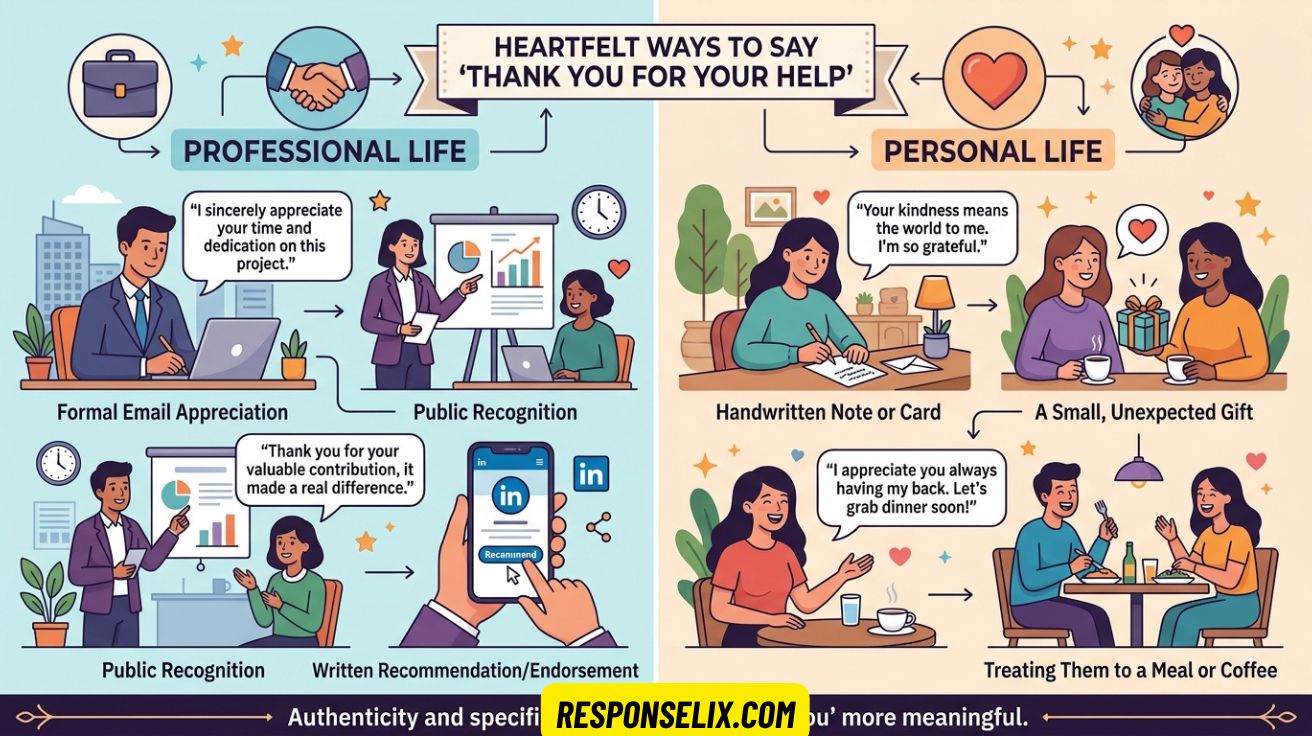
“Thank You for Your Help” is a polite way to show gratitude. It tells someone that you value their help. It works well in both personal and professional settings.
A simple thank-you can make a big difference. The right words can show respect and kindness. They can also make your message feel warm and sincere.
“Thank You for Your Help” is useful in emails, messages, and daily talks. You can use it after receiving support or guidance. It is short, clear, and easy to understand.
Why Saying “Thank You for Your Help” Matters More Than You Think

Most people underestimate the power of two words. Thank you for your help does more than acknowledge a task completed. It validates the effort behind the action. In American workplace culture, explicit appreciation directly ties to job satisfaction. When managers and peers consistently use professional appreciation phrases, teams report lower turnover rates and higher engagement. A simple “thank you for your support” signals respect. It tells the other person their time mattered. Ignoring this step creates a culture where contributions feel transactional. Humans need recognition. Without it, motivation drops. Using polite ways to express gratitude isn’t fluff; it fuels cooperation and psychological safety. When someone hears “I appreciate your help on this,” their brain releases dopamine, reinforcing the desire to help again in the future.
The Psychology Behind a Genuine “Thank You”
Gratitude rewires the brain. Neuroimaging studies show that expressing and receiving thanks activates the prefrontal cortex, the area responsible for decision-making and social bonding. When you use formal thank you phrases like “grateful for your support,” you create a positive feedback loop. The recipient feels valued. You feel good for making them feel good. This exchange builds “social capital,” the unspoken currency of strong relationships.
In a business email, skipping the thank you can make you seem demanding or entitled. Adding a sincere appreciation note changes the dynamic from command to collaboration. Effective professional email wording doesn’t just close a loop; it opens a door for future interaction. Expressing sincere gratitude triggers the law of reciprocity naturally. People want to work with people who don’t take them for granted.
How to Choose the Right Thank You Phrase for Every Situation
Context dictates language. You wouldn’t text your boss “thx” after a performance review. Nor would you send a stiff legal-sounding letter to a sibling who babysat your kids. Before picking from the list of 30 alternatives below, assess three factors: relationship, effort level, and medium.
- Relationship: Is this a superior, peer, subordinate, client, or personal friend? Formal correspondence requires more structure. Friendly interactions allow warmth.
- Effort Level: Did they spend five minutes or five weeks on your request? High-effort help deserves detailed appreciation messages for assistance.
- Medium: A quick Slack message works for prompt help. A handwritten card stands out for continued support during a long project.
Mastering email etiquette means balancing warmth with precision. When drafting professional gratitude messages, always specify what you’re thankful for. Blanket statements sound lazy. Specificity shows acknowledging someone’s effort authentically.
Common Mistakes When Saying Thank You (And How to Avoid Them)
Even good intentions can backfire. Watch for these traps:
- The Generic Blast: “Thanks everyone!” lacks impact. Take time to name individuals and their contributions. Recognizing valuable contributions requires granularity.
- The Delayed Response: A thank you email sent two weeks later feels guilty, not grateful. Use timely support windows. Respond within 24 hours for maximum effect.
- The Accidental Braggart: “Thanks, but I would have done it faster.” This negates the compliment. Keep the focus purely on thanking someone for their help.
- Over-Apologizing: “Sorry for bothering you, but thanks.” Don’t mix appreciation for assistance with guilt. It diminishes the sincerity.
- Using Gratitude to Manipulate: Don’t butter someone up only when you need the next favor. Professional communication relies on consistent, no-strings-attached workplace appreciation.
Alternatives to Say Thank You for Your Assistance in This Matter
Sometimes “thank you for your assistance” feels too stiff. Here are 25 dynamic alternatives to help you sound more human and connected.
1. Thank you for your support with this issue
This phrase works best when a problem felt stressful. It acknowledges emotional backing, not just technical assistance. Use it when thanking someone for their support during a crisis. It signals respectful communication and empathy. A great choice for phrases for thanking coworkers who stood by you during a tight deadline, reinforcing a spirit of business communication phrases.
2. I appreciate your help on this
Direct and warm. I appreciate your help lands softer than a curt “thanks.” It fits professional ways to say thank you without sounding stuffy. It signals genuine appreciation for support. Use it in phrases for thanking colleagues after a productive meeting. This simple line serves as a perfect formal appreciation message for standard collaboration. I rely on it heavily for rapid business email gratitude.
3. Grateful for your cooperation
Use this when teamwork achieved alignment. Grateful for your cooperation highlights a willingness to work together. It builds workplace communication bridges. A solid pick for thanking someone for their cooperation on a cross-departmental project. It reflects strong polite business phrases that strengthen inter-team reliance.
4. Thanks for your guidance regarding this
Mentorship deserves specific thanks. Thanks for your guidance validates the time someone spent steering you right. When you want to express appreciation for assistance that shaped a decision, this phrase lands. It’s essential for business email gratitude directed at senior leaders. This phrasing counts among the most powerful professional appreciation phrases for career growth conversations.
5. Many thanks for your attention to this matter
When someone reviews dense contracts, spreadsheets, or code with precision, their care matters. Many thanks for your attention to this matter praises that thoroughness. It’s a classic formal thank you phrase for legal or financial contexts, reinforcing respectful communication and genuine appreciation for assistance.
6. I sincerely appreciate your input
Feedback is a gift, but it can sting. Saying I sincerely appreciate your input builds a bridge after a critique. It shows emotional maturity. This is how you practice thanking someone for their support during reviews while displaying professional email wording finesse.
7. Thanks for your valuable assistance

“Valuable” makes the difference here. Thanks for your valuable assistance confirms the person didn’t just help—they added measurable worth. Ideal for recognizing valuable contributions in formal correspondence. It sits well in formal appreciation messages sent to consultants who delivered valuable assistance.
8. I’m thankful for your aid in this
“Aid” sounds slightly more intensive than “help.” I’m thankful for your aid in this suits situations where someone rescued a sinking project. It conveys deep relief and stands among the most meaningful professional ways to say thank you in crisis-resolution emails.
9. Appreciating your efforts in resolving this
Resolution requires persistence. By saying appreciating your efforts in resolving this, you honor the journey, not just the destination. This phrase works for acknowledging someone’s effort in long-term troubleshooting. Add it to your toolkit of polite business phrases for IT teams and operations staff.
10. Thank you for your prompt help
Speed saves money. When someone drops everything for you, thank you for your prompt help acknowledges urgency. It’s a top-tier choice for polite ways to express gratitude in fast-paced environments. Use it for thanking someone for their help during emergencies.
11. Thanks for your collaboration on this
Modern work is partnership. Thanks for your collaboration on this feels egalitarian and inclusive. Perfect for creative brainstorming or co-authoring documents. Workplace appreciation must emphasize team wins, and this phrase effectively supports phrases for thanking clients or partners.
12. I appreciate your dedication to this matter
Dedication is rare. I appreciate your dedication to this matter signals you noticed their persistence and sacrifice. This sincere appreciation works exceptionally well in professional gratitude messages for direct reports who surpass performance milestones.
13. Grateful for your involvement
Engagement drives progress. Saying you are grateful for your involvement draws introverted team members into the spotlight. It signals that appreciation for support extends beyond loud voices. Phrases for thanking colleagues like this create inclusive cultures through steady workplace communication.
14. Thank you for your timely support
Timing matters as much as action. Thank you for your timely support fits moments where delay would have caused failure. This option reinforces business communication phrases and underlines the critical nature of punctual assistance in this matter.
See Also : 30 Thank You for Your Partnership: Meaningful Messages
15. Many thanks for your expert help
Expertise takes years to build. Many thanks for your expert help gives credit to their specialized knowledge. It’s crucial appreciation for support when working with specialists. This stands among the most refined professional email wording choices for expert help.
16. I appreciate your kind assistance
Sometimes the delivery matters more than the solution. A patient tone counts. I appreciate your kind assistance recognizes their soft skills. Use this to convey business email gratitude for customer service or HR interactions that relied heavily on kind assistance.
17. Thanks for your continued support
Ongoing relationships are the bedrock of business. Thanks for your continued support protects that foundation. It’s best for phrases for thanking clients on retainer or mentors who show up month after month. A strong signal of continued support recognition.
18. Thank you for lending a hand with this
This idiom warms up stilted email. Thank you for lending a hand signals physical or logistical help. It’s an underused gem for polite ways to express gratitude to office mates and volunteers, reinforcing a spirit of ready appreciation for assistance.
19. I’m grateful for your attentive help
Details kill projects. I’m grateful for your attentive help rewards the person who caught the typo before the public saw it. Expressing thanks for attentive help builds a reputation for recognizing valuable contributions that others overlooked.
20. Thanks for your constructive feedback
Growth is uncomfortable. Thanks for your constructive feedback creates a learning environment. It expresses appreciation for assistance that challenges thinking and proves essential to workplace appreciation practices. Companies thrive when constructive feedback is welcomed.
21. I appreciate your readiness to assist
Availability is a gift of its own. I appreciate your readiness to assist celebrates proactive attitudes before the work even begins. This solidifies professional communication and helps normalize readiness to assist as a core team value in professional gratitude messages.
22. Thank you for your thorough support
Surface-level help rarely solves the root problem. Thank you for your thorough support acknowledges diligence and deep cleaning. This thorough support recognition validates exhaustive effort and reflects high-caliber formal thank you phrases.
23. Many thanks for your cooperation
Cooperation oils the machine of bureaucracy. Many thanks for your cooperation breaks down walls during compliance tasks or process changes. It remains a staple for thanking someone for their cooperation in formal correspondence and polite business phrases.
24. I appreciate your commitment to this matter
Loyalty to a goal inspires teams. I appreciate your commitment to this matter raises the stakes honorably. It shows you recognize dedication to this matter and serves well in appreciation messages for assistance on failing projects that needed a turnaround through commitment to this matter.
25. Thanks for your valuable contribution
Every team member wants to know their work mattered. Thanks for your valuable contribution directly ties their piece to the puzzle’s bigger picture. It’s essential for expressing sincere gratitude and for offering a formal nod to a valuable contribution.
26. I value your assistance greatly
Sometimes you need words that carry weight without feeling theatrical. This phrase delivers that balance. It moves past casual thanks into the territory of genuine regard. When you tell a colleague “I value your assistance greatly,” you signal that their contribution wasn’t just useful but personally meaningful. This wording works especially well in professional gratitude messages directed at mentors or long-term collaborators. It stands among polite business phrases that deepen trust without overpromising. Pair it with a specific detail about what they did. The specificity transforms a nice sentiment into a memorable appreciation for assistance.
27. Your support made a real difference

Results matter. When someone’s effort directly changed an outcome, tell them plainly. “Your support made a real difference” connects their action to your success. It works because it frames the help not as a minor favor but as a pivotal contribution. I use this frequently in business email gratitude after project completions. It ranks high among professional appreciation phrases for closing loops with warmth. The phrase also serves as an excellent tool for thanking someone for their support during fundraising campaigns or tight pitches where every second counted.
28. I couldn’t have done this without you
Vulnerability builds connection. Admitting dependence feels risky in professional settings, but it often lands powerfully. “I couldn’t have done this without you” strips away ego and hands credit where it belongs. This phrase works when a teammate pulled an all-nighter or a friend stepped up during a personal crisis. It is one of the most honest ways to express gratitude available. While it leans slightly informal, it remains acceptable in workplace communication when delivered with sincerity. Reserve it for moments of true reliance rather than routine tasks to preserve its impact.
29. Thank you for going above and beyond
Mediocrity is common. Excellence deserves recognition. “Thank you for going above and beyond” acknowledges that someone exceeded the baseline expectation. In customer service, consulting, or creative fields, this phrase validates extra hours and emotional labor. It serves as a cornerstone of recognizing valuable contributions that might otherwise go unnoticed. Managers who regularly use this wording see higher morale because it proves they notice discretionary effort. It fits naturally into phrases for thanking colleagues after product launches or event wrap-ups where teams stretched their limits.
See Also : 30 Different Ways to Say Merry Christmas: Fresh, Festive
30. I’m indebted to you for your help
Strong words create strong bonds. “I’m indebted to you for your help” communicates a depth of gratitude reserved for significant interventions. Maybe someone vouched for you during a layoff. Maybe they connected you to a career-changing contact. The word “indebted” signals you intend to reciprocate when the moment arises. This phrase belongs in formal thank you phrases and professional email wording for high-stakes relationships. While it carries intensity, using it sparingly makes your appreciation for assistance feel authentic rather than transactional. It reflects long-term relationship thinking.
31. Thanks for having my back on this
Loyalty deserves acknowledgment. “Thanks for having my back on this” speaks directly to trust and solidarity. In American workplace culture, this phrase resonates because it implies you were under pressure and they stood firm beside you. It works beautifully in phrases for thanking coworkers who defended your idea in a meeting or supported your decision during a difficult rollout. The language is slightly casual, making it ideal for polite ways to express gratitude within tight-knit teams. It reinforces workplace appreciation by celebrating allyship rather than just task completion.
Real-World Examples: Thank You Emails That Get Remembered

Theory is useful, but templates save time. Here are practical examples showcasing professional email wording that uses the keywords naturally.
Example 1: Post-Meeting Follow-up
Subject: Great session — thank you for your support with this issue
Hi Marcus,
I just wanted to send a quick note to say I appreciate your help on this. The client presentation flow is much stronger because of your design tweaks. I am sincerely grateful for your cooperation and valuable contribution today. It made a massive difference.
Best,
Sarah
Example 2: Feedback Received
Subject: Moving forward — I sincerely appreciate your input
Hi Elena,
Thank you for the review notes on the manuscript. Thanks for your constructive feedback. It was exactly the perspective I needed. I know how busy you are, so thanks for your attention to this matter. I’ll implement the changes by Friday.
Warmly,
David
Example 3: Long-Term Vendor Appreciation
Subject: Year-End Gratitude
Hi Robert,
As we wrap up Q4, I want to express my appreciation for your continued support. Your logistics team always delivers with timely support. Thank you for your thorough support during the warehouse transition. It could have been chaos without you.
Regards,
Linda
Table: Matching the Right Phrase to the Right Scenario
| Scenario | Recommended Phrase | Vibe |
|---|---|---|
| A colleague fixed a bug at 11 PM. | Thank you for your prompt help | Urgent & Grateful |
| A mentor reviewed your career plan. | Thanks for your guidance regarding this | Respectful & Reflective |
| A client signed a renewal contract. | Thanks for your continued support | Warm & Loyal |
| A manager gave tough performance advice. | Thanks for your constructive feedback | Mature & Open |
| A team member worked all weekend. | I appreciate your dedication to this matter | Deeply Recognizing Effort |
| A legal team reviewed a risky clause. | Many thanks for your attention to this matter | Formal & Precise |
| A friend helped you move furniture. | Thank you for lending a hand with this | Casual & Friendly |
| A consultant provided niche research. | Many thanks for your expert help | Admiring & Professional |
How to Express Appreciation for Assistance in Professional Settings
Expressing appreciation for assistance in this matter professionally goes beyond casual talk. It requires intentional language that reflects your awareness of hierarchical nuances. For senior executives, formal thank you phrases often incorporate a tone of deference. For example, “I am writing to express my sincere appreciation for assistance regarding the quarterly audit. Your expert help proved invaluable.” This formal correspondence style proves you take their time seriously.
For peers, flexibility matters. Most business communication phrases benefit from stripping stiff structures while keeping core gratitude visible. A quick “Thank you for your support with the slides, you saved my afternoon” actually outperforms a novel-length email. Professional ways to say thank you at the peer level balance workplace appreciation with approachability.
For clients, centering continued support keeps partnerships thriving. When sending phrases for thanking clients, always link their action to the resulting business impact. “Grateful for your cooperation in accelerating the launch timeline. Your readiness to assist meant we captured market share ahead of competitors.” This strategy delivers business email gratitude with tangible ROI.
Polite ways to express gratitude in a multi-generational workforce also demand code-switching. Baby Boomers often prefer tangible letters or professional appreciation phrases laced with formality. Millennials and Gen Z typically resonate with instant messages featuring specific emojis and language like “I appreciate your help today, legend.” Regardless of medium, the emotional payload must remain sincere appreciation.
Conflict resolution also relies on respectful communication. After heated debates, saying “I am grateful for your cooperation in finding middle ground” resets the room’s emotional temperature. It separates the person from the problem and advances acknowledging someone’s effort.
To reliably boost workplace communication, embed thanking someone for their support into post-mortem rituals. Publicly highlight an employee demonstrating commitment to this matter. A leader who routinely practices recognizing valuable contributions reshapes organizational culture toward psychological safety.
Finally, don’t fear vulnerability. “Your attentive help corrected my blind spot” exposes humility. It creates trust. Expressing thanks for timely support or a valuable contribution demonstrates that professional email wording can carry deep authenticity without becoming unprofessional.
Building a Habit of Workplace Appreciation
Sporadic gratitude fades. Systematic workplace appreciation transforms culture. Integrate “thank you for your assistance” into daily workflows. Start meetings with shout-outs for thorough support. Use project management tools to tag a colleague and say “Appreciating your efforts in resolving this bug.” This public visibility normalizes business email gratitude.
Create a repository of formal appreciation messages. When you’re exhausted, default to proven professional ways to say thank you rather than skipping gratitude entirely. Consistent polite business phrases make thanking someone for their help an automated leadership reflex.
The cumulative effect of expressing sincere gratitude for valuable assistance turns transactional offices into communities. It ensures every stakeholder feels seen. Use the 25 alternatives above as a daily checklist. Acknowledge kind assistance, reward readiness to assist, and celebrate every valuable contribution openly. Doing so eradicates complacency and builds a fortress of loyalty.
Frequently Asked Questions
How do you say thank you for your help?
Say, “Thank you for your help.” You can also say, “I really appreciate your help.”
How do you say thank you for all of your help?
Say, “Thank you for all your help.” This shows gratitude for someone’s continued support.
Is “thanks for your help” correct?
Yes, “Thanks for your help” is correct, natural, and friendly.
What is another way to say “thank you for your help”?
You can say, “I appreciate your assistance,” “Thanks for your support,” or “I’m grateful for your help.”
Final Thoughts
“Thank You for Your Help” is a simple and polite way to show gratitude. It tells someone that you value their time, effort, and support. This phrase works well in emails, messages, and daily conversations. You can use it with friends, coworkers, clients, teachers, or other people who help you. Clear words make your thanks feel honest and respectful.
You can also use other polite phrases to show appreciation. For example, you can say, “I appreciate your help” or “Thanks for your support.” These phrases work well in both formal and friendly situations. A kind thank-you can build trust and improve relationships. “Thank You for Your Help” remains a clear, warm, and useful phrase for many situations.